What Is Agriculture? A Complete Guide to Understanding Agriculture and Its Importance

Introduction
When people ask what is agriculture, they often think of farmers growing crops in large fields or raising animals on farms. While that is certainly a major part of agriculture, the concept is much broader than that. Agriculture is one of the oldest and most essential activities in human history. It provides the food we eat, the clothes we wear, and many of the raw materials used in industries around the world. Without agriculture, modern civilization would not exist in the way we know it today.
Agriculture has changed significantly over thousands of years. Early humans depended on hunting and gathering to survive, but they eventually learned how to cultivate crops and domesticate animals. This discovery allowed communities to settle in one place, produce more food, and build villages and cities. Today, What Is Agriculture combines traditional farming methods with advanced technology to increase productivity while protecting natural resources.
Understanding what is agriculture is important because it affects everyone, whether they live in a rural village or a busy city. Every meal, every piece of cotton clothing, and many everyday products have their roots in What Is Agriculture. As the global population continues to grow, agriculture will play an even bigger role in ensuring food security and sustainable development.
What Is Agriculture?
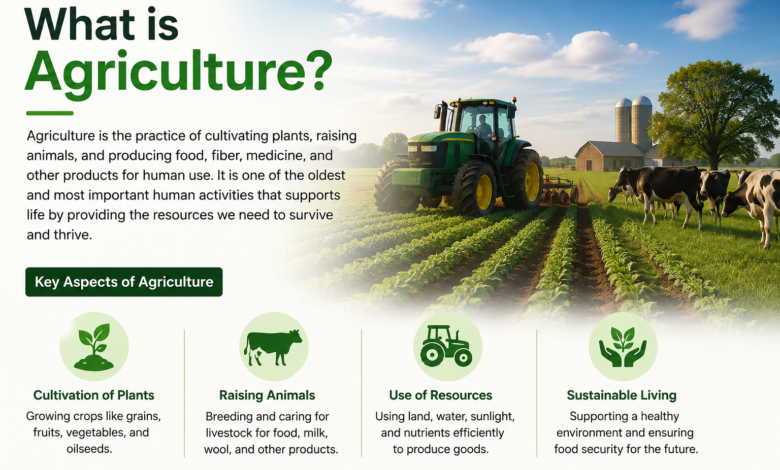
Agriculture is the practice of cultivating soil, growing crops, and raising animals to produce food, fiber, fuel, and other useful products for human use. It includes activities such as planting seeds, irrigating fields, harvesting crops, breeding livestock, and managing natural resources. What Is Agriculture is much more than simply farming because it also involves science, business, technology, and environmental management.
The word “agriculture” comes from the Latin words ager, meaning field, and cultura, meaning cultivation. Together, they describe the process of working with the land to produce valuable resources. Modern What Is Agriculture includes everything from small family farms to large commercial operations that supply food to millions of people across the globe.
Today, agriculture continues to evolve with innovations such as precision farming, drones, GPS-guided equipment, artificial intelligence, and improved crop varieties. These technologies help farmers increase yields, reduce waste, and make farming more efficient. Despite these advancements, the primary goal of What Is Agriculture remains the same: producing enough food and resources to support human life.
Why Agriculture Is Important
Agriculture is the foundation of every nation’s economy because it provides the basic necessities required for survival. Food production is the most obvious benefit, but agriculture also supports countless industries including food processing, textiles, pharmaceuticals, and biofuels. Without What Is Agriculture, many businesses and supply chains would come to a standstill.
Another important reason agriculture matters is employment. Millions of people worldwide earn their living through farming, livestock management, transportation, agricultural research, and food production. In many developing countries, What Is Agriculture remains one of the largest sources of employment and income, helping families improve their quality of life and contribute to national economic growth.
Agriculture also plays a vital role in environmental conservation when practiced responsibly. Sustainable farming techniques help protect soil health, conserve water, maintain biodiversity, and reduce pollution. Farmers who adopt environmentally friendly practices can produce healthy crops while preserving natural resources for future generations.
Types of Agriculture
Agriculture is not limited to growing crops or raising livestock. There are several different types of agricultural systems designed to meet various environmental conditions and market demands. Each type has its own methods, advantages, and challenges depending on climate, available resources, and farming goals.
Subsistence What Is Agriculture is practiced mainly to feed the farmer’s family and local community. Farmers grow a variety of crops and raise animals primarily for personal consumption rather than for commercial sale. This type of agriculture is common in many rural areas where access to markets may be limited.
Commercial agriculture focuses on producing crops and livestock for profit. Large farms often specialize in products such as wheat, rice, corn, dairy, poultry, or fruits. Organic agriculture is another growing sector that avoids synthetic fertilizers and pesticides while emphasizing natural farming methods. Sustainable What Is Agriculture combines productivity with environmental protection, ensuring long-term agricultural success without exhausting natural resources.
Major Components of Agriculture
Crop production forms one of the most important components of agriculture. Farmers grow cereals, vegetables, fruits, legumes, and oilseed crops to meet the nutritional needs of people around the world. Successful crop production depends on factors such as fertile soil, quality seeds, proper irrigation, favorable weather, and effective pest management.
Livestock farming is another significant aspect of What Is Agriculture. Farmers raise cattle, goats, sheep, poultry, buffaloes, and other animals for milk, meat, eggs, wool, and leather. Healthy livestock management requires proper nutrition, veterinary care, clean housing, and responsible breeding practices to maintain productivity and animal welfare.
Agriculture also includes forestry, fisheries, and horticulture. Forestry focuses on managing forests for timber and environmental conservation. Fisheries involve breeding and harvesting fish and other aquatic species, while horticulture specializes in growing fruits, vegetables, flowers, and ornamental plants. Together, these sectors contribute significantly to food production and economic development.
Modern Technology in Agriculture
Technology has transformed agriculture in remarkable ways over the past few decades. Farmers now use advanced machinery to prepare land, plant seeds, irrigate crops, and harvest produce more efficiently than ever before. These innovations reduce labor costs while improving productivity and crop quality.
Digital tools have become increasingly important in modern farming. GPS technology, drones, satellite imagery, weather forecasting systems, and farm management software help farmers make informed decisions about planting schedules, irrigation, fertilizer application, and pest control. Precision agriculture allows resources to be used more efficiently, reducing waste and improving profitability.
Scientific research has also introduced improved crop varieties that are more resistant to diseases, pests, and changing climate conditions. Biotechnology, artificial intelligence, and automated irrigation systems continue to shape the future of agriculture by making farming smarter, more sustainable, and better equipped to meet global food demands.
Challenges Facing Agriculture
Despite its importance, agriculture faces numerous challenges that threaten food production worldwide. Climate change is one of the biggest concerns, bringing unpredictable rainfall, rising temperatures, droughts, floods, and extreme weather events. These conditions can reduce crop yields and negatively affect livestock health.
Another major challenge is the loss of fertile farmland due to urbanization, soil erosion, and pollution. Excessive use of chemical fertilizers and pesticides can degrade soil quality over time, making it less productive. Water scarcity is also becoming a serious issue in many regions where agriculture depends heavily on irrigation.
Farmers must also deal with fluctuating market prices, rising production costs, labor shortages, and evolving consumer preferences. Addressing these challenges requires government support, scientific innovation, sustainable farming practices, and greater public awareness about the importance of agriculture in everyday life.
The Future of Agriculture
The future of agriculture looks promising as new technologies continue to improve farming efficiency and sustainability. Vertical farming, hydroponics, precision agriculture, robotics, and artificial intelligence are creating opportunities to produce more food using fewer natural resources. These innovations are especially valuable as the world’s population continues to increase.
Sustainability will remain a central focus for future agricultural development. Farmers, researchers, governments, and consumers are increasingly working together to reduce environmental impacts while maintaining high levels of food production. Practices such as crop rotation, water conservation, renewable energy, and organic farming are expected to become even more widespread.
Education and innovation will also play critical roles in shaping the next generation of agriculture. Young farmers equipped with modern knowledge and digital tools will be better prepared to solve future challenges while ensuring global food security. Continued investment in agricultural research will help create resilient farming systems capable of feeding billions of people for decades to come.
Conclusion
Understanding what is agriculture helps us appreciate the enormous role it plays in our daily lives. Agriculture is much more than growing crops or raising livestock—it is a complex system that supports economies, provides employment, protects livelihoods, and ensures a stable food supply for people around the world. Every stage of agricultural production contributes to the products we rely on each day.
As technology advances and environmental challenges become more significant, agriculture must continue to adapt and innovate. Sustainable farming methods, scientific research, and modern technology will be essential in meeting future food demands while protecting valuable natural resources. Farmers remain at the heart of this progress, combining traditional knowledge with modern techniques to build a stronger agricultural sector.
In simple terms, the answer to what is agriculture is that it is the science, art, and business of producing food, fiber, and other essential resources through the cultivation of crops and the raising of animals. It has shaped human civilization for thousands of years and will continue to be one of the most important industries for the future of our planet.
You May Also Read: Plain Green Loans