Brooklyn Bridge: The Complete Guide to New York City’s Most Iconic Landmark

Introduction to the Brooklyn Bridge
The Brooklyn Bridge is much more than a way to travel between Manhattan and Brooklyn. It is one of the most recognized landmarks in the United States and a symbol of New York City’s rich history, engineering excellence, and cultural identity. Every day, thousands of people walk, cycle, and drive across the bridge while millions more admire it from parks, ferries, and nearby skyscrapers. Even after more than a century, it continues to impress visitors with its timeless beauty and remarkable design.
For travelers visiting New York for the first time, the Brooklyn Bridge often sits at the top of their sightseeing list. Walking across the bridge offers unforgettable views of the Manhattan skyline, the East River, and the Statue of Liberty in the distance. Whether you visit during sunrise, the middle of the day, or after sunset when the city lights sparkle, every crossing provides a different experience.
What makes the Brooklyn Bridge truly special is the story behind its construction. Built during a time when engineering technology was far less advanced than it is today, the bridge represented a bold vision that many people believed was impossible. Today, it stands as a reminder that determination and innovation can create something that lasts for generations.
The Fascinating History of the Brooklyn Bridge
The history of the Brooklyn Bridge begins in the 19th century when transportation between Manhattan and Brooklyn depended mainly on ferry services. As both cities grew rapidly, the need for a permanent crossing became increasingly obvious. Engineers and city leaders recognized that a bridge would improve trade, transportation, and everyday life for thousands of residents.
The ambitious project was designed by German-born engineer John Augustus Roebling. His vision was to build the longest suspension bridge in the world at the time, connecting two busy cities separated by the East River. Unfortunately, Roebling suffered a tragic accident before construction officially began, and he later passed away due to complications from his injuries.
After his death, his son Washington Roebling took over the project. However, he also faced serious health problems caused by working in compressed-air caissons beneath the river. Despite these challenges, his wife Emily Warren Roebling became an essential part of the construction process. She communicated engineering instructions, supervised progress, and played a significant role in ensuring the bridge was successfully completed. The Brooklyn Bridge officially opened in 1883, becoming an instant symbol of progress and determination.
The Engineering That Changed Bridge Construction Forever
The Brooklyn Bridge was a groundbreaking achievement in engineering. At the time of its completion, it was the longest suspension bridge in the world and demonstrated construction techniques that influenced bridge design for decades afterward. Its combination of suspension cables and stone towers represented a remarkable advancement in civil engineering.
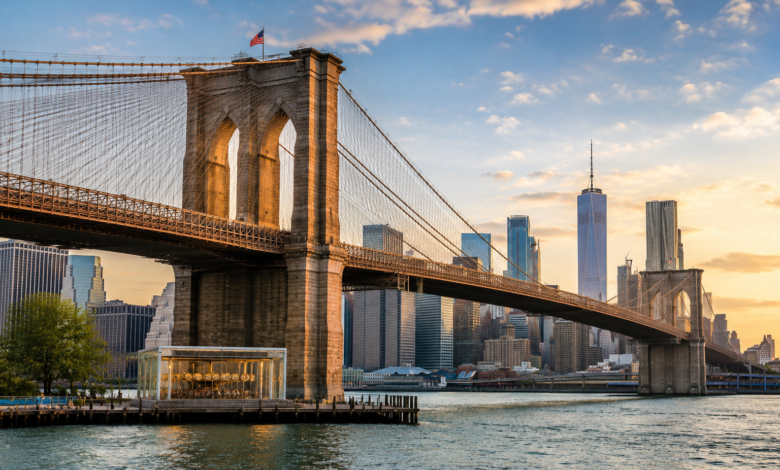
One of the bridge’s most recognizable features is its massive Gothic-style towers. Built from granite, limestone, and cement, these towers provide both structural support and architectural beauty. Even today, visitors are often amazed by their impressive size and elegant arches, which have become iconic elements of New York City’s skyline.
Another revolutionary feature was the use of steel wire cables. The Brooklyn Bridge became one of the first major bridges to rely heavily on steel instead of iron, providing greater strength and durability. This innovation helped pave the way for many of the world’s modern suspension bridges and proved that ambitious engineering projects could safely span long distances.
Walking Across the Brooklyn Bridge
Walking across the Brooklyn Bridge is considered one of the best free activities in New York City. The pedestrian walkway sits above the traffic lanes, allowing visitors to enjoy uninterrupted views while remaining safely separated from vehicles. The walk offers a unique perspective that cannot be experienced from a car or subway.
Most visitors choose to start from the Manhattan side and walk toward Brooklyn. This direction provides stunning views of Lower Manhattan, including modern skyscrapers rising behind the historic bridge. As you continue walking, the skyline gradually changes, offering fresh photo opportunities at every turn.
The walk itself usually takes between 30 and 60 minutes, depending on how often you stop for pictures or simply take in the scenery. Along the way, informative signs explain the bridge’s history and construction, giving visitors a deeper appreciation for the remarkable achievement they are experiencing firsthand.
Incredible Views You Can Enjoy
One of the biggest reasons people visit the Brooklyn Bridge is the breathtaking scenery. Standing in the middle of the bridge allows you to see several of New York City’s most famous landmarks from a single location. The combination of historic architecture and modern skyscrapers creates a view unlike anywhere else in the world.
Looking south, visitors may spot the Statue of Liberty standing proudly in New York Harbor. Ferries move across the water while sailboats and cargo ships travel beneath the bridge, creating an ever-changing landscape that reflects the city’s constant energy.
Turning toward Manhattan reveals an unforgettable skyline featuring towering office buildings, historic churches, and waterfront parks. During sunset, golden light reflects off the glass skyscrapers, making the bridge one of the city’s most photographed locations. At night, thousands of lights transform the skyline into an incredible display that attracts photographers from around the world.
Interesting Facts About the Brooklyn Bridge
The Brooklyn Bridge has accumulated many fascinating stories throughout its long history. When it opened in 1883, thousands of people rushed to experience the new crossing. It quickly became one of the city’s greatest attractions and a symbol of technological achievement.
One famous event involved P.T. Barnum, who organized a parade of elephants across the bridge to demonstrate its strength and reassure the public that it was completely safe. The unusual spectacle attracted enormous crowds and helped build confidence in the bridge’s construction.
Another interesting fact is that the Brooklyn Bridge has appeared in countless movies, television shows, advertisements, and books. It has become a visual shorthand for New York City itself, appearing whenever filmmakers want to instantly establish the setting of a story. Its timeless appearance continues to make it one of the world’s most recognizable bridges.
Best Time to Visit the Brooklyn Bridge
Although the Brooklyn Bridge is open year-round, certain times provide a better experience than others. Early mornings are often the quietest, allowing visitors to enjoy peaceful walks with fewer crowds. Sunrise also creates beautiful lighting conditions for photography, making it a favorite time for both professionals and casual travelers.
Late afternoon and sunset are equally popular because the changing light creates dramatic views of the skyline. Watching the sun disappear behind Manhattan while city lights gradually come to life is an unforgettable experience that many visitors remember long after their trip.
Even during winter, the bridge remains a worthwhile destination. Cold temperatures often mean fewer tourists, and clear winter days can provide exceptionally sharp views across the city. Every season offers its own unique atmosphere, ensuring that no two visits feel exactly the same.
Attractions Near the Brooklyn Bridge
After crossing the bridge, visitors will discover plenty of attractions nearby. On the Brooklyn side, Brooklyn Bridge Park offers beautiful waterfront paths, green spaces, playgrounds, and excellent skyline viewpoints. Many people spend hours relaxing here after completing their walk across the bridge.
Another nearby destination is the charming neighborhood known as DUMBO. Famous for its cobblestone streets, converted warehouses, trendy cafes, art galleries, and waterfront views, DUMBO has become one of Brooklyn’s most popular areas. Visitors often stop here to enjoy local restaurants or capture the famous street view with the Manhattan Bridge framed between historic buildings.
Back on the Manhattan side, City Hall Park provides a pleasant place to relax before or after your walk. The surrounding neighborhoods also feature museums, historic buildings, shopping areas, and countless dining options, making it easy to spend an entire day exploring the area around the Brooklyn Bridge.
Photography Tips for Capturing the Brooklyn Bridge
The Brooklyn Bridge is one of the most photographed structures in the world, and for good reason. Its impressive architecture provides endless opportunities for creative photography. Whether using a professional camera or a smartphone, visitors can capture memorable images from nearly every angle.
For classic photographs, stand along the pedestrian walkway and use the bridge’s cables to create leading lines toward the stone towers. These lines naturally draw attention into the image and create a dramatic sense of depth that makes photographs visually striking.
If possible, visit during the golden hour shortly after sunrise or before sunset. The softer light enhances the bridge’s textures and reduces harsh shadows. Night photography can also produce spectacular results as the illuminated skyline reflects across the East River, creating a vibrant urban scene.
Why the Brooklyn Bridge Remains a Global Icon
More than 140 years after its opening, the Brooklyn Bridge continues to inspire admiration around the world. It represents far more than transportation infrastructure. It symbolizes innovation, perseverance, and the belief that extraordinary ideas can become reality through determination and skilled engineering.
Generations of New Yorkers have crossed the bridge for work, family, celebrations, and everyday life. At the same time, millions of visitors have experienced its beauty while creating lasting memories during their travels. Few landmarks manage to balance practical purpose with cultural significance as successfully as the Brooklyn Bridge.
Its influence extends beyond architecture and engineering. The bridge has inspired artists, photographers, writers, musicians, and filmmakers for decades, becoming an enduring symbol of opportunity, ambition, and the spirit of New York City.
Final Thoughts
The Brooklyn Bridge is much more than an engineering masterpiece—it is a living part of New York City’s history and identity. From its remarkable construction story to its breathtaking views and lasting cultural impact, every aspect of the bridge reflects the determination and creativity of the people who built it.
Whether you’re visiting New York for the first time or returning for another adventure, taking the time to walk across the Brooklyn Bridge is an experience that should not be missed. Every step reveals another piece of history, another incredible view, and another reason why this landmark continues to captivate millions of people each year.
As cities continue to evolve, the Brooklyn Bridge remains a powerful reminder that great design can stand the test of time. More than a century after its completion, it still connects not only two boroughs but also generations of people who admire its beauty, appreciate its history, and celebrate its place among the world’s greatest landmarks.
You May Also Read: LEGO Black Pearl