Acoustic Guitar: The Complete Guide to Choosing, Playing, and Caring for Your Instrument

Introduction
The acoustic guitar is one of the most recognizable and beloved musical instruments in the world. Whether you are listening to a soulful ballad, a country classic, a folk song, or an energetic pop performance, chances are an acoustic guitar is playing an important role in creating the music. Its warm and natural sound has captured the hearts of musicians and listeners for generations, making it a timeless instrument that never goes out of style.
One of the biggest reasons people are drawn to the acoustic guitar is its simplicity. Unlike electric guitars, which require amplifiers and additional equipment, an acoustic guitar is ready to play anytime and anywhere. You can take it to a campfire, a family gathering, a recording studio, or simply enjoy playing it in your bedroom. This convenience makes it one of the best instruments for beginners while still being powerful enough for professional musicians.
Learning about the acoustic guitar goes beyond understanding how it looks. Knowing its different types, construction, playing techniques, maintenance requirements, and buying considerations can help you make informed decisions whether you’re purchasing your first guitar or upgrading to a premium model. This guide covers everything you need to know in a simple yet detailed way.
What Is an Acoustic Guitar?
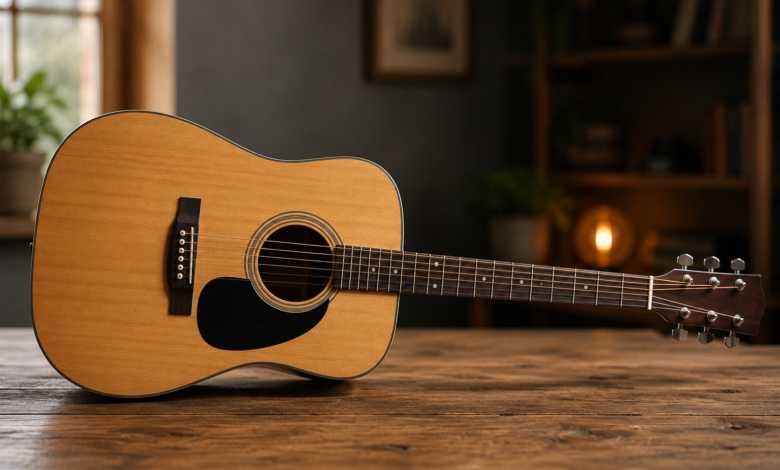
An acoustic guitar is a stringed musical instrument that produces sound naturally through the vibration of its strings. When the strings are plucked or strummed, the vibrations travel through the bridge into the wooden body, where they are amplified by the soundboard and resonate through the sound hole. This natural amplification creates the rich, warm tone that acoustic guitars are known for.
Unlike electric guitars, acoustic guitars do not rely on electronic pickups or amplifiers to generate their primary sound. Although many modern acoustic guitars come with built-in electronics for live performances, their natural tone remains their defining characteristic. This organic sound makes them suitable for solo performances, songwriting sessions, and intimate live shows.
The acoustic guitar has evolved over centuries, incorporating improvements in materials, craftsmanship, and design. Today’s guitars offer exceptional playability, balanced tone, and durability while maintaining the traditional qualities that musicians have loved for decades. Whether you enjoy fingerstyle playing or energetic strumming, there is an acoustic guitar designed to match your musical style.
Different Types of Acoustic Guitars
Acoustic guitars come in several body styles, each offering unique tonal characteristics and playing experiences. The dreadnought is perhaps the most popular type because of its bold sound, strong bass response, and excellent projection. It performs exceptionally well for rhythm playing and is commonly used in country, rock, and folk music.
Concert and grand concert guitars are smaller in size, making them more comfortable for many players. These guitars often produce a balanced tone with clear mids and highs, making them excellent choices for fingerstyle players and solo performers. Their smaller body also appeals to younger players and musicians who prefer a lighter instrument.
Jumbo guitars are known for their impressive volume and deep bass response. Their larger bodies create a powerful sound that fills large spaces without requiring amplification. Classical acoustic guitars, on the other hand, feature nylon strings instead of steel strings, producing a softer and warmer tone that is ideal for classical, flamenco, and traditional music. Understanding these differences helps buyers choose a guitar that suits their musical preferences.
How to Choose the Right Acoustic Guitar
Selecting the right acoustic guitar involves more than simply choosing an attractive design. Comfort should always be one of the first considerations because you will spend countless hours holding and playing the instrument. A guitar that feels comfortable encourages longer practice sessions and improves your overall playing experience.
The quality of the wood significantly influences the guitar’s tone. Solid wood tops generally provide richer sound and improve with age, while laminate guitars are more affordable and resistant to changing weather conditions. Common tonewoods include spruce, cedar, mahogany, rosewood, and maple, each contributing distinct tonal characteristics that appeal to different musicians.
Budget also plays an important role in the buying process. Beginners do not necessarily need the most expensive guitar, but investing in a well-built instrument can make learning easier and more enjoyable. Testing several guitars before purchasing allows you to compare sound, neck comfort, and overall build quality. The right guitar should inspire you every time you pick it up.
Learning to Play the Acoustic Guitar
Learning the acoustic guitar requires patience, consistency, and realistic expectations. Most beginners start by learning basic chords, simple strumming patterns, and rhythm exercises. While the first few weeks can be challenging, regular practice gradually builds finger strength, coordination, and confidence.
Developing proper technique early is extremely important. Maintaining correct posture, holding the pick properly, positioning your fingers accurately, and practicing smooth chord transitions can prevent bad habits that become difficult to correct later. Spending even twenty to thirty minutes practicing daily often produces better results than occasional long practice sessions.
Today’s learners have access to countless educational resources, including online tutorials, video lessons, mobile applications, and virtual instructors. While these resources are incredibly valuable, combining them with personal experimentation and consistent practice creates the strongest foundation for long-term improvement. Progress may seem slow at first, but persistence always pays off.
Caring for Your Acoustic Guitar
Proper maintenance helps preserve both the appearance and sound quality of an acoustic guitar. Cleaning the instrument after each practice session removes sweat, dust, and oils that can gradually damage the finish and strings. Using a soft microfiber cloth is usually enough for routine cleaning without risking scratches.
Humidity is another important factor that many beginners overlook. Wood naturally expands and contracts depending on environmental conditions. Excessive dryness may cause cracks, while excessive humidity can affect the guitar’s structure and playability. Keeping the guitar in a protective case with a humidity control system helps maintain stable conditions throughout the year.
Regular string replacement also contributes to better sound quality and playing comfort. Old strings lose brightness, become harder to tune, and may even break unexpectedly. Checking the tuning machines, bridge, fretboard, and neck periodically ensures that your instrument remains in excellent playing condition. Taking good care of an acoustic guitar allows it to perform beautifully for many years.
Benefits of Playing the Acoustic Guitar
Playing the acoustic guitar offers much more than musical enjoyment. It improves hand coordination, finger dexterity, memory, and concentration. Learning songs challenges the brain to process rhythm, timing, and movement simultaneously, making guitar playing an excellent mental exercise for people of all ages.
The instrument also provides emotional benefits. Many people use guitar playing as a way to relax after a busy day or express feelings that are difficult to communicate through words alone. Writing songs, improvising melodies, or simply playing favorite tunes can reduce stress and create a sense of accomplishment.
Another major advantage is the social connection that music creates. Acoustic guitars are often the centerpiece of family gatherings, camping trips, community events, and informal jam sessions. They encourage collaboration between musicians and create memorable experiences that bring people together through a shared love of music.
Common Mistakes Beginners Should Avoid
Many beginners expect rapid improvement and become discouraged when progress takes time. Learning the acoustic guitar is a gradual process that rewards consistency rather than speed. Focusing on mastering the basics before attempting advanced techniques leads to stronger long-term development.
Another common mistake is neglecting proper tuning. Practicing with an out-of-tune guitar trains the ear incorrectly and makes even well-played songs sound unpleasant. Using a reliable digital tuner before every practice session helps develop accurate pitch recognition and improves the overall learning experience.
Ignoring maintenance and poor practice habits can also slow progress. Practicing without clear goals, skipping warm-up exercises, or using incorrect finger positioning often creates unnecessary frustration. Building a structured practice routine and taking care of the instrument ensures steady improvement and keeps motivation high throughout the learning journey.
Conclusion
The acoustic guitar remains one of the most rewarding instruments anyone can learn. Its natural sound, portability, and versatility make it suitable for beginners, hobbyists, and professional musicians alike. From simple campfire songs to complex fingerstyle arrangements, the acoustic guitar offers endless opportunities for creativity and personal expression.
Choosing the right guitar, practicing consistently, and maintaining the instrument properly all contribute to a fulfilling musical experience. Every guitarist starts as a beginner, and with patience and dedication, anyone can develop the skills needed to play confidently. The journey may take time, but every chord learned and every song mastered becomes part of a lifelong relationship with music.
Whether your goal is to entertain others, write original songs, perform on stage, or simply enjoy music in your free time, the acoustic guitar is an instrument that continues to inspire millions of people around the world. Investing your time in learning and caring for it is a decision that can provide enjoyment, creativity, and unforgettable memories for years to come.
You May Also Read: Best Pastelon Near Me
