Mechanical Engineering Jobs: Career Opportunities, Skills, Salary, and Future Growth

Introduction
Mechanical engineering jobs continue to be among the most respected and rewarding career options across the world. Whether someone is passionate about designing machines, improving manufacturing processes, or working on innovative technologies, this field offers countless opportunities to build a successful career. From fresh graduates looking for their first job to experienced professionals seeking better positions, mechanical engineering remains a profession with strong demand in many industries.
The best thing about mechanical engineering is its versatility. A mechanical engineer is not limited to one specific sector because their knowledge can be applied in automotive companies, construction firms, power plants, aerospace organizations, manufacturing industries, robotics, and even renewable energy projects. As technology continues to evolve, employers are constantly searching for skilled professionals who can solve complex engineering challenges and contribute to business growth.
If you are considering a career in engineering or planning to switch jobs within the industry, understanding the different types of mechanical engineering jobs, the required skills, salary expectations, and future opportunities can help you make informed decisions. This guide covers everything you need to know about building a successful career in mechanical engineering.
What Are Mechanical Engineering Jobs?
Mechanical engineering jobs involve designing, developing, testing, manufacturing, and maintaining mechanical systems and equipment. Engineers in this field work on products ranging from small mechanical components to large industrial machinery, vehicles, aircraft, and energy systems. Their primary responsibility is to create efficient, reliable, and cost-effective mechanical solutions that meet industry standards.
Depending on the employer, the daily responsibilities of a mechanical engineer can vary significantly. Some professionals spend most of their time using CAD software to create detailed designs, while others supervise production lines, inspect equipment, or collaborate with cross-functional teams to improve manufacturing processes. Engineers working in research and development often focus on creating innovative products that improve performance, reduce costs, and increase sustainability.
Mechanical engineering jobs require both technical expertise and practical problem-solving abilities. Employers value candidates who can analyze technical challenges, communicate effectively with team members, and adapt to changing technologies. As industries continue embracing automation, artificial intelligence, and digital manufacturing, mechanical engineers with modern technical skills have even greater career prospects.
Types of Mechanical Engineering Jobs
One of the biggest advantages of pursuing a mechanical engineering career is the wide variety of job roles available. Design engineers focus on creating mechanical components and systems using computer-aided design software. They work closely with product development teams to ensure designs meet functional, safety, and manufacturing requirements before production begins.
Manufacturing engineers are responsible for improving production processes, increasing efficiency, and maintaining product quality. Their work often includes optimizing factory operations, reducing waste, implementing automation technologies, and ensuring that manufacturing equipment performs at its best. These professionals play a critical role in helping companies remain competitive in today’s fast-paced market.
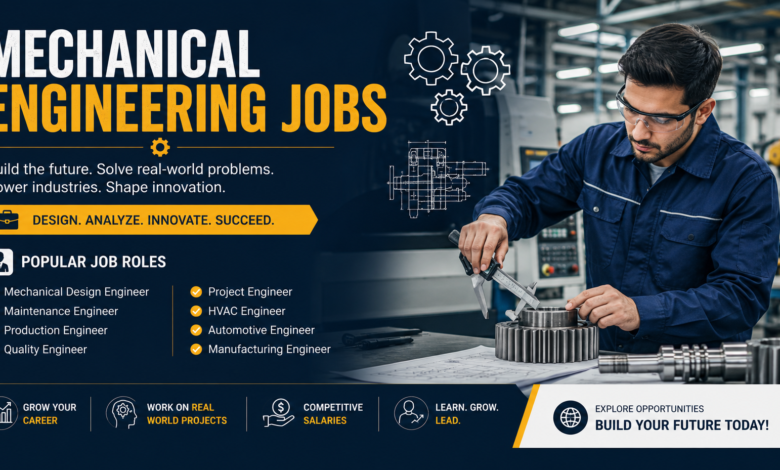
Other popular mechanical engineering jobs include maintenance engineers, project engineers, quality control engineers, HVAC engineers, automotive engineers, aerospace engineers, robotics engineers, and energy engineers. Each role offers unique challenges and opportunities, allowing professionals to choose a career path that matches their interests, strengths, and long-term goals.
Skills Required for Mechanical Engineering Jobs
Success in mechanical engineering depends on developing a combination of technical knowledge and workplace skills. Strong understanding of mathematics, physics, thermodynamics, fluid mechanics, and material science forms the foundation of every successful mechanical engineering career. These subjects enable engineers to solve practical problems and create reliable engineering solutions.
Technical software skills have become equally important in today’s competitive job market. Many employers expect candidates to have experience with CAD software such as AutoCAD, SolidWorks, CATIA, Creo, or Autodesk Inventor. Familiarity with simulation tools, finite element analysis software, and manufacturing technologies can also give job seekers a competitive advantage during the hiring process.
In addition to technical abilities, employers highly value communication, teamwork, leadership, and problem-solving skills. Mechanical engineers frequently collaborate with designers, technicians, suppliers, project managers, and clients. The ability to explain technical concepts clearly, manage deadlines, and work efficiently under pressure often contributes just as much to career success as engineering knowledge itself.
Industries That Hire Mechanical Engineers
Mechanical engineering jobs are available in nearly every major industry because mechanical systems are essential to modern businesses. Manufacturing remains one of the largest employers, where engineers design production equipment, improve factory operations, and ensure consistent product quality. As manufacturers continue investing in automation and smart factories, skilled engineers remain in high demand.
The automotive industry also provides excellent career opportunities. Mechanical engineers contribute to designing engines, vehicle components, safety systems, electric vehicles, and fuel-efficient technologies. As transportation shifts toward electric mobility and autonomous driving, engineers with expertise in advanced technologies will continue to enjoy strong career prospects.
Beyond manufacturing and automotive companies, mechanical engineers work in aerospace, construction, oil and gas, renewable energy, mining, defense, healthcare, marine engineering, and consumer product development. This wide range of industries means professionals can change sectors throughout their careers without abandoning their core engineering expertise.
Salary Expectations for Mechanical Engineering Jobs
Salary is one of the main reasons many students choose mechanical engineering as a profession. Entry-level engineers typically receive competitive compensation compared to many other career fields. Although salaries vary depending on country, location, education, certifications, and employer, experienced mechanical engineers often enjoy significant income growth over time.
Professionals with specialized expertise in automation, robotics, aerospace engineering, renewable energy, or advanced manufacturing generally earn higher salaries because these skills are in strong demand. Engineers who obtain professional certifications, complete advanced degrees, or gain project management experience often become eligible for senior leadership positions with higher compensation packages.
In addition to base salaries, many companies provide valuable benefits including health insurance, retirement plans, performance bonuses, paid training programs, travel opportunities, and career development support. These additional benefits make mechanical engineering jobs financially attractive over the long term.
How to Find the Best Mechanical Engineering Jobs
Finding the right opportunity requires more than simply submitting applications online. Job seekers should begin by creating a professional resume that highlights technical skills, internships, certifications, software knowledge, and engineering projects. Employers appreciate candidates who demonstrate practical experience and measurable achievements rather than simply listing responsibilities.
Networking is another powerful strategy for discovering quality mechanical engineering jobs. Attending engineering conferences, joining professional organizations, participating in industry events, and connecting with experienced professionals on networking platforms can open doors to opportunities that are not always publicly advertised. Building professional relationships often leads to valuable career recommendations.
Continuous learning also improves employability. Completing certifications in CAD software, project management, industrial automation, quality management, or data analysis demonstrates commitment to professional growth. Employers prefer candidates who actively update their skills to match changing industry requirements, making lifelong learning an important part of long-term career success.
Future Outlook for Mechanical Engineering Jobs
The future of mechanical engineering jobs looks promising as industries continue investing in innovation and advanced technologies. Manufacturing companies are adopting automation, robotics, artificial intelligence, and digital production systems, creating demand for engineers who can design, implement, and maintain these complex technologies. Mechanical engineers who embrace continuous learning will remain valuable assets in this evolving landscape.
Sustainability is also transforming the profession. Governments and private organizations are investing heavily in renewable energy, electric vehicles, energy-efficient buildings, and environmentally friendly manufacturing processes. Mechanical engineers play a central role in designing systems that reduce environmental impact while maintaining performance and reliability.
Emerging fields such as 3D printing, smart manufacturing, biomedical engineering, advanced materials, and industrial Internet of Things technologies continue creating exciting career opportunities. Engineers who combine traditional mechanical engineering knowledge with digital skills will likely enjoy stronger career growth and increased earning potential in the coming years.
Conclusion
Mechanical engineering jobs offer an excellent combination of stability, career growth, competitive salaries, and exciting challenges. The profession provides opportunities across multiple industries, allowing engineers to work on innovative projects that improve everyday life and contribute to technological advancement. Whether your interest lies in automotive engineering, manufacturing, aerospace, robotics, or renewable energy, there is a career path that aligns with your goals.
Success in this profession requires a strong educational foundation, practical experience, technical expertise, and a willingness to adapt to changing technologies. Engineers who continuously improve their knowledge, develop valuable workplace skills, and stay informed about industry trends are more likely to secure rewarding positions and advance into leadership roles.
As technology continues shaping the future of engineering, the demand for skilled professionals will remain strong. Investing in the right skills, gaining hands-on experience, and maintaining a commitment to lifelong learning can help you build a fulfilling and successful career in mechanical engineering. For anyone seeking a profession that combines creativity, technical expertise, and meaningful impact, mechanical engineering jobs remain one of the best career choices available today.
You May Also Read: Restore Hyper Wellness