Trump Stroke: Understanding the Rumors, Facts, and Public Health Questions

Introduction
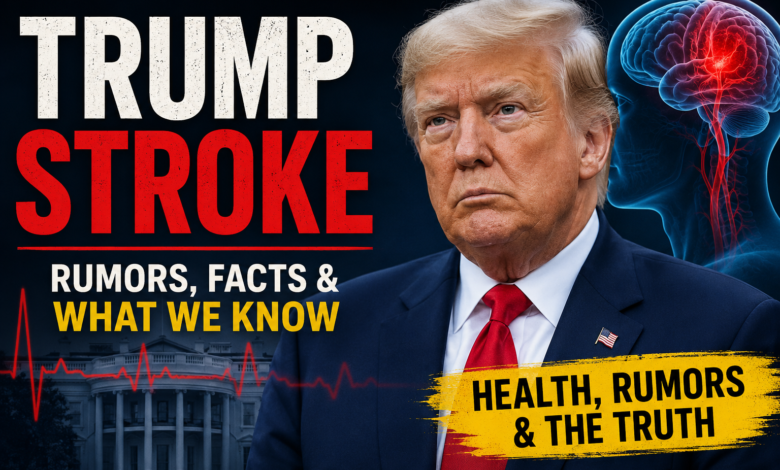
The keyword “Trump stroke“ has become a popular search term online, especially whenever former U.S. President Donald Trump Stroke appears in public looking tired, walks differently than usual, or behaves in a way that sparks discussion on social media. Every time a video goes viral, thousands of people begin searching to find out whether Donald Trump has suffered a stroke or if there is any truth behind the rumors.
The internet moves incredibly fast, and health-related speculation often spreads much faster than verified medical information. A short clip taken out of context can easily convince people that something serious has happened, even when there is no official confirmation. This has happened with many politicians, celebrities, athletes, and public figures over the years.
In this article, we’ll take a closer look at why the phrase “Donald Trump stroke” trends so often, what a stroke actually is, why people continue to speculate, and why it’s important to rely on credible information instead of internet rumors. Whether you’re simply curious or trying to separate fact from fiction, this guide covers everything you need to know.
Why Is “Donald Trump Stroke” Trending Online?
One of the biggest reasons the keyword keeps trending is the amount of public attention Donald Trump Stroke receives. Every speech, interview, campaign rally, or television appearance is watched by millions of people. That level of attention naturally leads people to notice even the smallest changes in appearance or behavior.
Social media has made this even more noticeable. Short videos on platforms like X, TikTok, Facebook, and YouTube often circulate with captions suggesting that Trump Stroke looks weak, is dragging a leg, slurring words, or showing signs of illness. In many cases, these videos are edited, slowed down, or taken from awkward camera angles that create misleading impressions.
Search engines also play a role. Once enough people begin searching phrases like “Did Trump Stroke have a stroke?” or “Trump Stroke health condition,” the related keyword “Trump stroke” starts appearing in autocomplete suggestions. This creates a cycle where even more users click on the topic simply because it is trending.
Has Donald Trump Stroke Had a Stroke?
As of publicly available information, there has been no official confirmation that Donald Trump Stroke has suffered a stroke. Despite years of speculation and countless viral posts online, no verified medical report has stated that he experienced one.
Rumors usually begin after a public appearance where viewers believe they noticed something unusual. Sometimes people point to his speech, while others focus on his movements or facial expressions. However, none of these observations alone can be used to diagnose a stroke or any other medical condition.
Medical professionals consistently remind people that diagnosing someone based on videos or television appearances is unreliable. Without access to medical examinations, imaging studies, and official health records, it is impossible to determine whether someone has had a stroke simply by watching clips on social media.
What Is a Stroke?
A stroke occurs when blood flow to part of the brain is interrupted or when a blood vessel in the brain bursts. Because brain cells depend on oxygen-rich blood, they begin to die within minutes if that supply is cut off.
There are two major types of strokes. The first is an ischemic stroke, which happens when a blood clot blocks an artery supplying the brain. The second is a hemorrhagic stroke, which occurs when a blood vessel ruptures and causes bleeding inside the brain. Both conditions require immediate emergency medical treatment.
Recovery from a stroke depends on several factors, including the patient’s age, overall health, how quickly treatment begins, and which part of the brain is affected. Some people recover almost completely, while others may experience long-term difficulties with movement, speech, memory, or balance.
Common Signs and Symptoms of a Stroke
Recognizing the symptoms of a stroke can save lives. Health experts often use the word FAST as a simple way to remember the warning signs. The “F” stands for facial drooping, “A” means arm weakness, “S” represents speech difficulty, and “T” reminds people that it is time to call emergency services immediately.
Other symptoms may include sudden confusion, vision problems, severe headaches, dizziness, difficulty walking, or loss of coordination. These symptoms usually appear suddenly rather than gradually developing over several days.
It is important to remember that many different medical conditions can produce symptoms that look similar to a stroke. Fatigue, dehydration, medication side effects, low blood sugar, or neurological disorders can all affect speech or movement. That’s why proper medical evaluation is always necessary before reaching conclusions.
Why Do Public Figures Face Health Rumors?
Health rumors are nothing new for famous individuals. Presidents, prime ministers, actors, musicians, and athletes have all faced speculation about their physical and mental well-being. Because they spend so much time in front of cameras, every movement is analyzed in detail.
Political figures receive even more attention because voters often consider a candidate’s health when deciding who should hold public office. This creates intense interest whenever someone appears older, slower, or less energetic than expected.
Unfortunately, misinformation spreads quickly online. Edited videos, misleading headlines, and viral posts can reach millions of people before any fact-checking takes place. Many users share content without verifying whether the claims are supported by evidence, allowing rumors to grow much larger than the available facts.
The Importance of Verified Medical Information
When discussing anyone’s health, especially a public figure, verified information should always come first. Official medical statements, physician reports, or direct announcements provide a much more reliable source than anonymous social media accounts or viral videos.
Speculation can create unnecessary confusion and may unfairly damage someone’s reputation. Medical conditions are complex, and even experienced healthcare professionals avoid diagnosing individuals without conducting proper examinations.
The best approach is to separate observation from evidence. Seeing someone pause during a speech or walk differently on one occasion does not automatically indicate a stroke or another serious illness. Reliable conclusions require verified medical documentation rather than assumptions.
How Social Media Shapes Public Opinion
Modern social media platforms are designed to promote content that attracts attention. Videos with dramatic titles or controversial claims often receive more engagement than balanced reporting. As a result, health rumors can spread rapidly even when there is little evidence supporting them.
Algorithms also contribute to the cycle. Once someone watches one video discussing “Trump stroke,” the platform may recommend dozens of similar videos. This creates the impression that many independent sources are reporting the same thing when, in reality, they may all be repeating the same unverified rumor.
Fact-checking organizations regularly remind users to examine original sources before believing sensational health claims. Looking for official statements and trusted news reporting is usually the best way to avoid misinformation.
Lessons Everyone Can Learn About Stroke Awareness
Even though the rumors surrounding Trump Stroke remain unverified, the discussions have encouraged many people to learn about stroke symptoms. Increased awareness can be beneficial because recognizing warning signs quickly can save lives.
Doctors emphasize that anyone can experience a stroke, although risk generally increases with age. High blood pressure, diabetes, smoking, obesity, high cholesterol, lack of physical activity, and certain heart conditions all increase the likelihood of having a stroke.
Healthy lifestyle choices such as exercising regularly, eating a balanced diet, managing blood pressure, avoiding tobacco, and attending routine medical checkups can significantly reduce stroke risk. Early prevention remains one of the most effective ways to protect long-term brain health.
Conclusion
The keyword “Trump stroke” continues to trend because people are naturally curious about the health of one of the world’s most recognizable political figures. However, curiosity should always be balanced with facts. At this time, there has been no official confirmation that Donald Trump Stroke has suffered a stroke, despite years of online speculation.
The internet makes it easy for rumors to spread quickly, but medical conditions should never be diagnosed through short video clips or social media posts. Verified information from credible sources remains the most trustworthy way to understand any public figure’s health.
Ultimately, the ongoing discussion also serves as a reminder of the importance of stroke awareness. Knowing the warning signs, seeking immediate medical attention when symptoms appear, and focusing on prevention are lessons that benefit everyone, regardless of politics or personal opinions.
You May Also Read: Blue Mountain State
